Setting the run
The order of the obstacles
Ten pieces, one strap, and no instructions. Four layouts we keep going back to.
The easy crossing
Everything close together, rings first, bars last. A child can reach the next handhold before letting go of the one behind, which is the layout that turns a nervous first attempt into a second attempt.
The grip ladder
Same pieces, ordered from easiest to hold to hardest. Wide bars, then rings, then the monkey fists. Everyone gets further than they expect and stops at a different place, which keeps a group of mixed ages on the same run.
The long gap
Two obstacles at each end and a wide empty stretch in the middle. It looks lazy and it is the hardest layout we have, because the only way across is a swing with commitment.
The relay
Split the line in half and work from both ends. Two children, two starts, meeting in the middle. It solves the queue, and it is the only arrangement that has ever stopped an argument about whose turn it was.
What goes up between the anchors
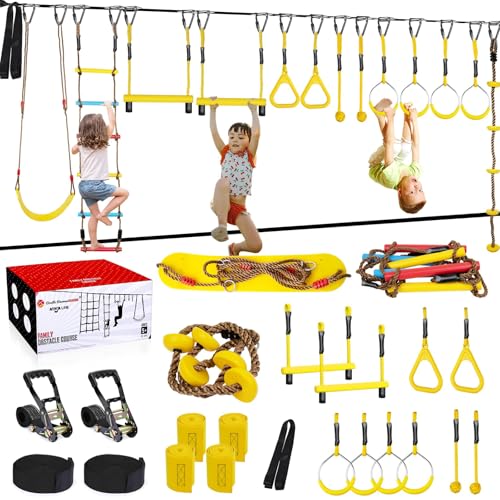
The 14-Station Line, 2x65 ft
Our long run: two 65-foot straps and fourteen places to hang, swing or haul yourself up.
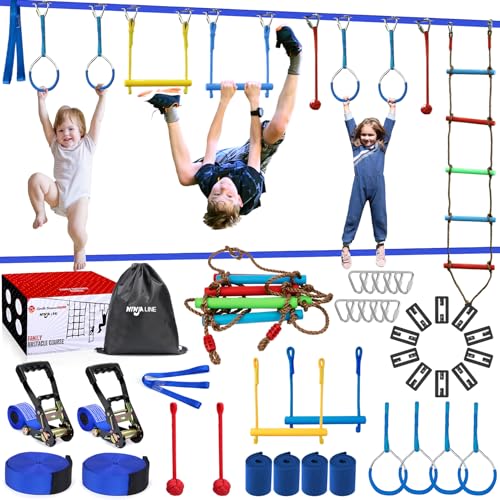
The 10-Station Line, 2x56 ft
Ten obstacles on two 56-foot straps — the kit most yards actually have room for.
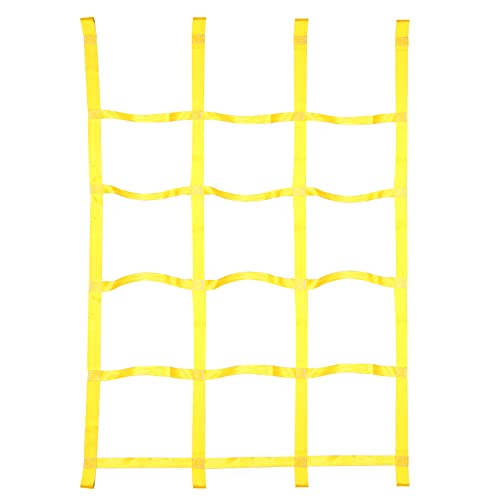
Climbing Cargo Net and Rope Ladder
A yellow webbing net that turns any beam, branch or line into a climb.